SERVICES11
SERVICE AREAS14
EV charger installation in Orlando
Tesla, Ford, Rivian, Hyundai, universal J1772. We run a load calculation before we quote, so you are not paying for a service upgrade you do not need.
Short garage run on an existing panel with capacity is the low end. Long runs, exterior conduit, subpanels, or a service upgrade push it up.
What decides your price
If two or more of these describe your house, it is worth a free estimate. If none of them do, you probably do not need us yet — and we would rather tell you that now.
Which charger level does your home actually need?
Almost every Central Florida home should be on Level 2. Here's the honest comparison so you can see why.
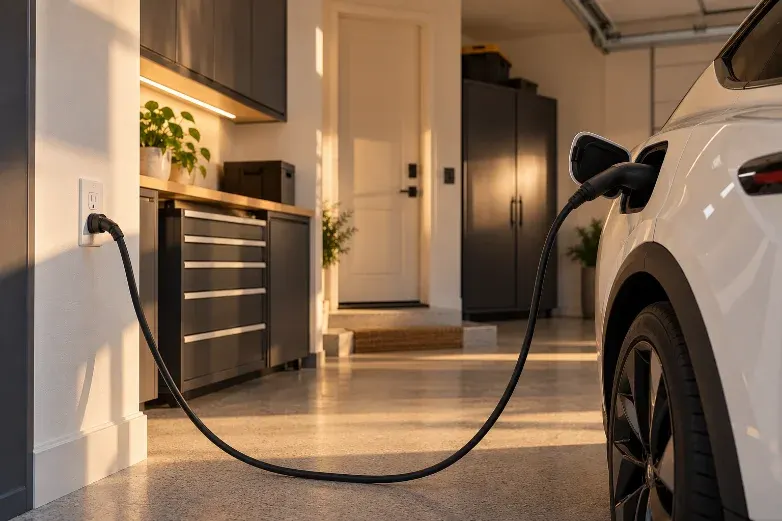
The cord that came with the car
Plugs into a regular outlet. Fine if you drive under 30 miles a day and can leave it plugged in all night. Usually no install needed — though we often find the garage outlet is shared and trips.
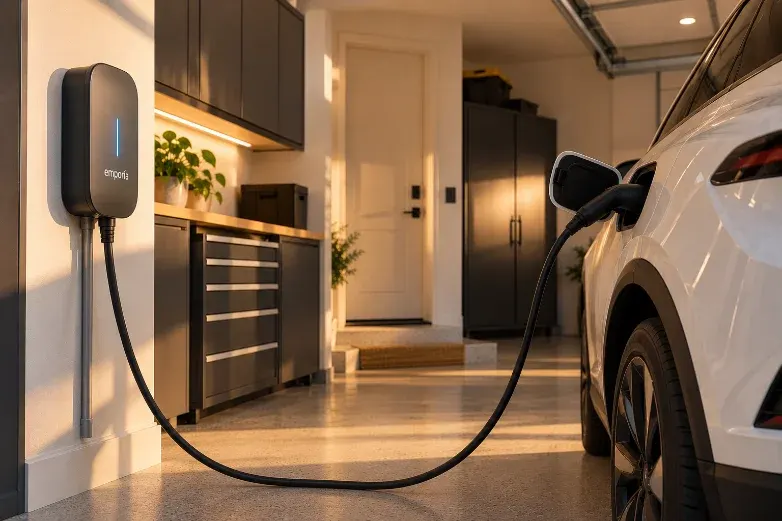
The right answer for most homes
A dedicated 240-volt circuit, like a dryer. Full charge overnight for any EV on the road. This is what the price ranges below are for.
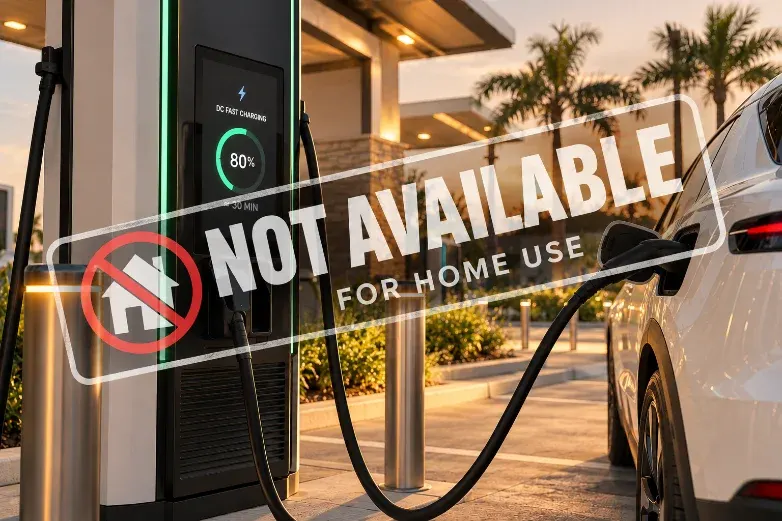
Not a home product
Needs three-phase commercial power. It's what you find at highway stations and some businesses. If someone quotes you one for your house, get a second opinion.
The average Central Florida commute is under 40 miles a day. Level 2 refills a week of driving in one night.
Every major brand. Or bring your own.
We don't sell chargers, so we have no reason to push one. Buy whichever fits your car and budget — any UL-listed unit — and we'll install it to the manufacturer's spec.


Tesla Wall Connector installation in Orlando.
For Orlando EV charger installation, the Tesla Wall Connector goes in like any hardwired Level 2 unit, with a few settings that have to match your panel.
Up to 48 amps on a 60-amp breaker
That is full speed. If your panel cannot spare 60 amps, we set the charger lower during setup so it matches the circuit we can safely give it.
Wall Connector or Universal
The Tesla-only Wall Connector charges Teslas. The Universal Wall Connector also charges any J1772 car, so it is the better pick if a non-Tesla is coming.
Power sharing on one circuit
Two Wall Connectors can share one circuit and split the power between cars automatically, instead of you paying for a second circuit or a bigger service.
We check the garage signal first
The Wall Connector uses Wi-Fi for setup and firmware updates. We check the signal where it mounts before we drill, not after.
What you can get back on a home EV charger installation.
It depends on your utility. Here is what OUC and Duke Energy Florida offer homeowners right now, and what ended.
$200 when you buy or lease an EV
OUC pays a $200 bill credit for a new EV purchase or lease, if you apply within six months. It does not rebate the charger itself, and OUC asks customers to contact it before adding a 240-volt charger. Make that call before your install date.
A monthly credit, plus help with the wiring
The Off-Peak Charging Credit pays $7.50 a month for charging on a Level 2 charger during off-peak hours, for up to two EVs per account. The Charger Prep Credit is a one-time credit toward the wiring and outlet work. It does not cover the charger or the permit.
The 30C home charger credit has ended
The federal credit for home chargers stopped for equipment placed in service after June 30, 2026. A charger installed now does not qualify, whatever anyone selling one tells you.
In Kissimmee (KUA), Winter Park, or another city-owned utility? Ask your utility, or ask us at the estimate. Programs change, so we confirm what is current for your address and give you an itemized invoice for any application.
Five things set your price.
Room for a 40–60 A breaker? We check with a free load calculation — most homes have it.
Every foot from panel to parking spot is wire and conduit. Same-wall installs are cheapest.
Through an attic, under a slab, across block walls or outside in conduit — each changes the labor.
A 14-50 outlet, a hardwired 48 A unit, or a smart charger with load sharing.
Already in our price. Many installers quote without it and add it later.
Real numbers.
Not "call for pricing."
Nobody else in this market publishes ranges, which is exactly why we do. You will get an exact number at the estimate — this is so you know whether to bother calling.
We price match any written quote from another licensed, insured contractor. Military, first responders and teachers get a discount — just say so on the phone, no coupon to find.
The charger itself isn't included. These prices are for installation only — buy the charger you want (Tesla, ChargePoint, Emporia, or any UL-listed unit) and we'll install it.
Three ways to charge at home. Pros and cons of each.
Which one fits depends on your panel, your garage and how far you drive. We'll tell you straight at the estimate — this is the short version.
Plug-in charger on a NEMA 14-50 outlet
Hardwired wall charger
Smart charger with load management
CONTROL THE LOAD FROM YOUR PHONE
Illustrative numbers. Your real figures come from the free load calculation at the estimate.
App features vary by brand. Tesla Wall Connector, Emporia, ChargePoint Home Flex and Wallbox all offer app control. We'll set the amperage limit to match your panel's load calculation when we install it.
Decide these before you order a charger.
Not sure on any of them? That's what the free estimate is for — we'll answer all six in one visit.
Garage, carport or driveway. Outdoor spots need a weather-rated unit.
Measure from the wall to your charge port. Most cables are 18–25 ft.
Plug-in moves with you; hardwired is faster and lasts longer.
32 A covers most commutes. 48 A only matters if you drive far every day.
Planning a second EV? Load sharing now saves a second circuit later.
Some need board approval for exterior conduit. Ask before we schedule.
How the install goes
Most people's worry is not the price, it is not knowing what is about to happen in their house. So here it is.
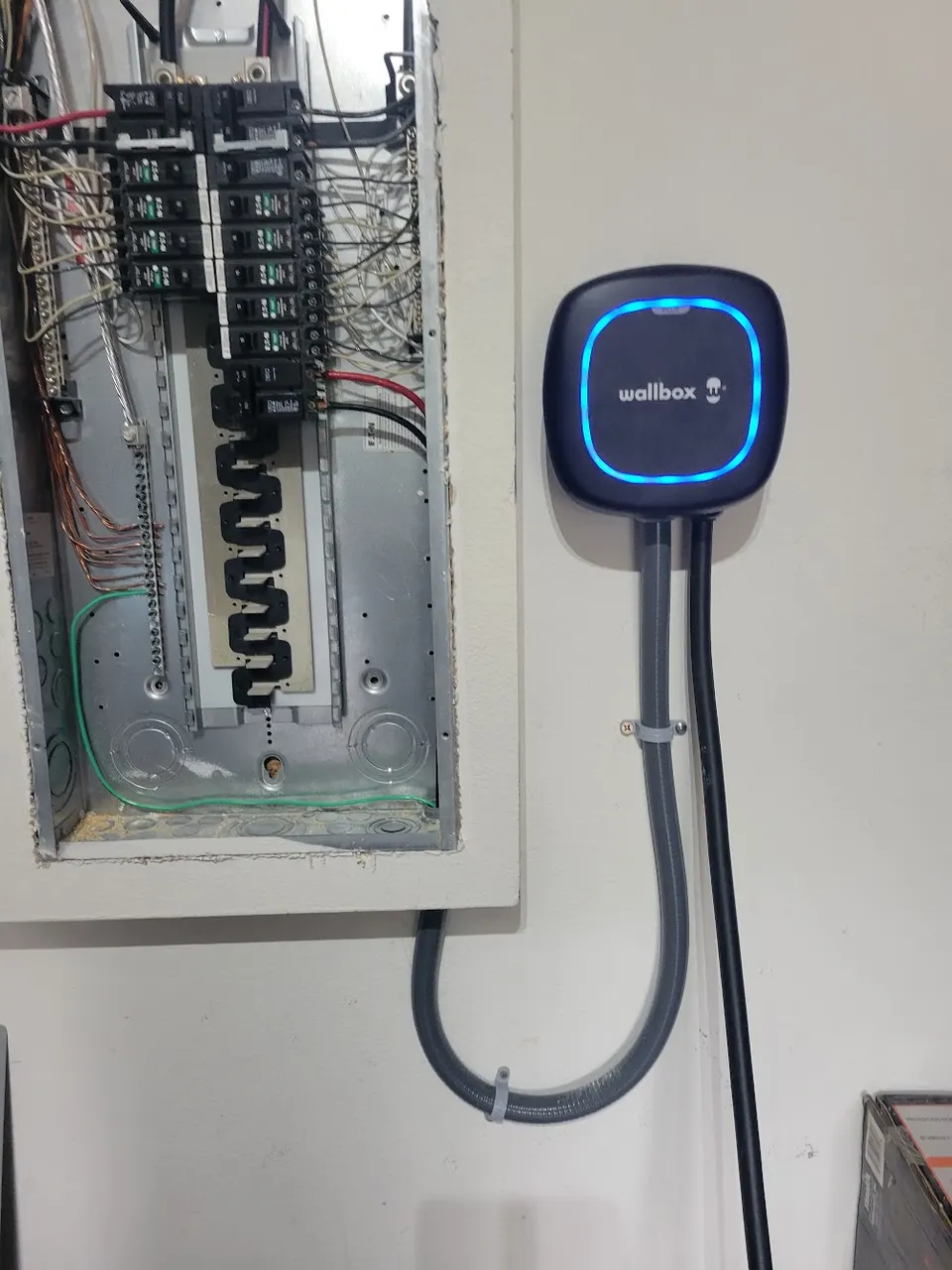
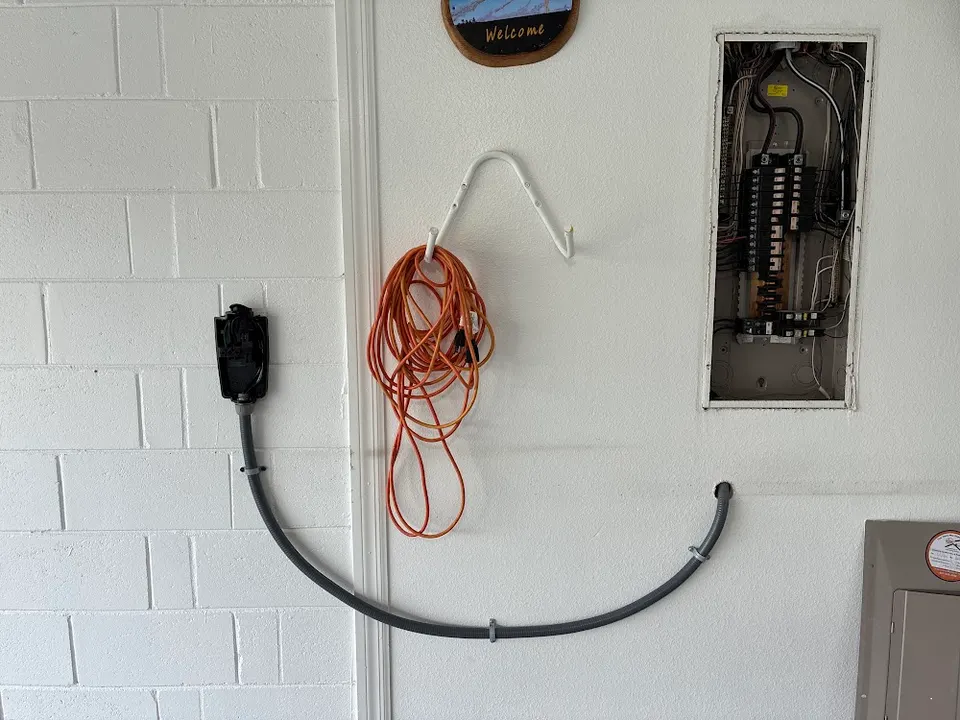
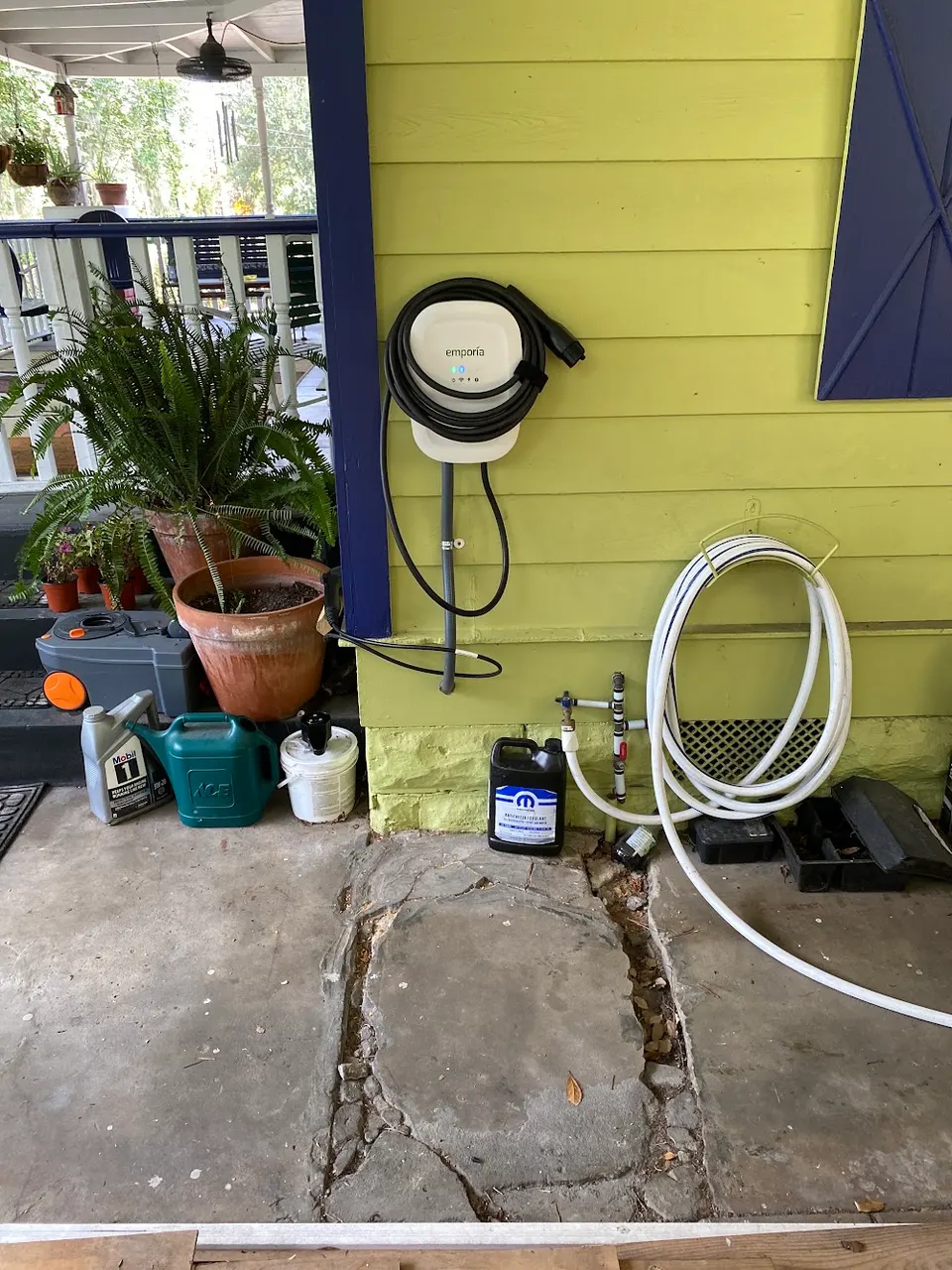
Recent jobs, EV charger installation
Real reviews, word for word.

"The electrician Keylin was very professional and helpful. Did a great job for my EV charger outlet installation."

"After getting the run around from other electricians I came across In Phase. Wish I found them first."
"Unlike some of their competitors, they don't try to up-sell products that aren't strictly necessary."
"Talking with anyone I mean anyone at this company is like talking with a best friend."
Charging for businesses, condos and HOAs.
Workplaces, retail lots, apartment and condo garages, fleet parking. We do the load study, size the service, pull the commercial permit and coordinate with your property manager or board — one charger or twenty.
We handle it. You handle nothing.
EV circuits are permitted electrical work in every Central Florida jurisdiction. It is a fast permit and a quick inspection — the only thing that slows it down is an installer who skipped it, which is also how you void your homeowner's coverage.
It surfaces at resale, in an insurance claim, and in an inspection you did not schedule.
If a bid is dramatically under ours, ask whether the permit is included. Usually that is the difference.
Filed, scheduled, and met. Customers thank our office by name in reviews for exactly this.
Straight answers.
Do I need a panel upgrade for an EV charger?
Usually not. A load calculation tells us for certain, and load-management devices can often avoid an upgrade entirely. We have talked plenty of people out of a $3,000 upgrade they did not need.
Hardwired or plug-in?
Hardwired is slightly more efficient and tidier; a 14-50 receptacle is more flexible if you change cars. We will tell you which fits your setup.
How long does it take?
Most installs are half a day. Long runs or a subpanel can take a full day.
Are there rebates in Central Florida?
Utility and federal incentives change year to year. Ask us what is current when you call — we track them because our customers ask.
Can you install a charger I already bought?
Yes, any listed unit. We are not tied to one brand.
Two cars, two chargers?
Common. Load management lets two chargers share a circuit intelligently instead of doubling your service.
Do I need a permit?
Yes, an EV circuit is permitted work. We file it.
Outdoor install in Florida weather?
Fine with a listed outdoor-rated unit and proper conduit. Ninety percent of our failures on other people's work are bad exterior penetrations.
What size breaker does a Level 2 charger need?
The breaker is sized at 125% of what the charger draws, because charging is a continuous load. A 32-amp charger needs a 40-amp breaker, a 40-amp charger needs 50, and a 48-amp charger needs 60. We match the wire to the breaker and set the charger's own limit to agree.
Do I need a permit for an EV charger in Orange, Seminole or Osceola County?
Yes. A new EV circuit is permitted electrical work in every Central Florida city and county we serve. We file the permit and meet the inspector, and the permit is already included in our price.
Can a Tesla charger charge a non-Tesla car?
The Tesla Universal Wall Connector can — it has a built-in J1772 adapter, so it charges a Tesla and almost any other EV. The standard Tesla Wall Connector is Tesla-only unless you add an adapter. Most new non-Tesla cars are moving to the Tesla plug (NACS), so either one is a safe long-term choice.
Is a smart EV charger worth it?
Usually, yes. App control lets you schedule charging overnight, cap the amps so the house never overloads, and share one circuit between two cars. Load management alone often avoids a panel upgrade, which pays for the smart charger several times over.
Can you install chargers at a business, condo or HOA?
Yes. Workplaces, retail, multi-unit buildings and HOA common areas are commercial installs — we do the load study, pull the permit, and coordinate with the association or property manager. Condo owners: get board approval for the route first and we'll tell you exactly what to ask for.
Is there still a federal tax credit for home EV chargers?
No. The federal 30C credit for home chargers ended for anything installed after June 30, 2026. Some utilities still run rebates or cheaper overnight rates — ask us when you call and we'll tell you what's current for your address.
EV charger installation across Central Florida
Get a straight answer before you get a bill.
Free estimate. If you do not need the work, we will tell you — that is the whole reason people come back to us.