
SERVICES11
SERVICE AREAS14
Whole-home surge & lightning protection
Central Florida gets more lightning than anywhere else in the United States. A whole-home suppressor at the panel is the cheapest insurance in this trade.
A quality Type 2 device at the panel is the low end. Layered protection — panel plus point-of-use at AC, well pump, and electronics — is the upper end.
Why this is not optional here
If two or more of these describe your house, it is worth a free estimate. If none of them do, you probably do not need us yet — and we would rather tell you that now.
Where surge protection goes — and why one layer isn't enough.
Surge protectors are rated by where they sit, from where power enters the house to the device. Most homes need Type 2 at the panel, backed by Type 3 at sensitive electronics.
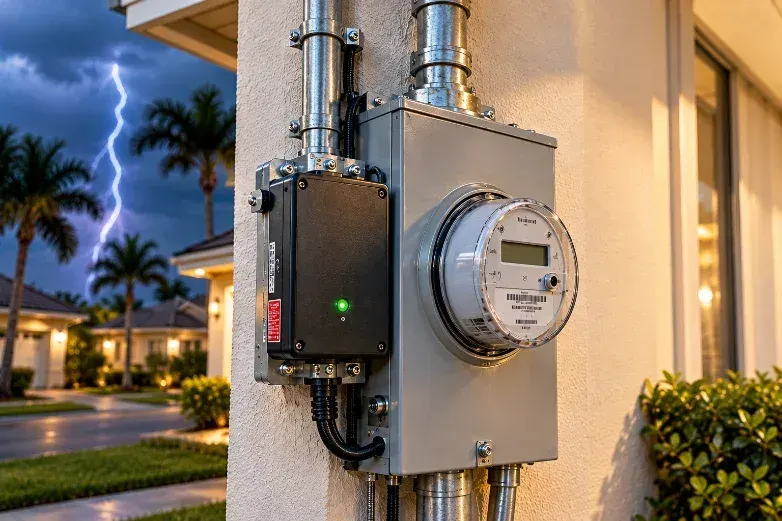
Line side
First line of defense
Installed at the service entrance, ahead of the main breaker. Takes the biggest hits coming in on the utility lines from lightning and grid switching. Worth adding where strikes are frequent.
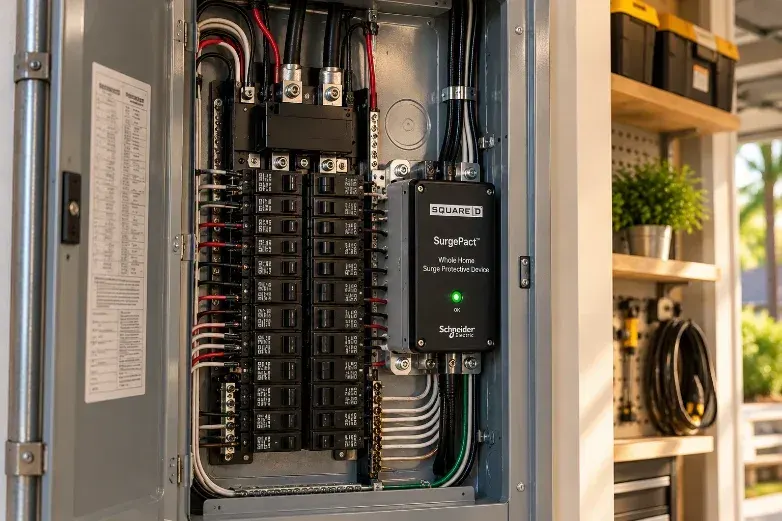
Whole home
Every circuit downstream
Mounted in or beside your panel, after the main breaker. Protects every circuit the panel feeds, including AC, appliances and pool equipment. The one most homes need.
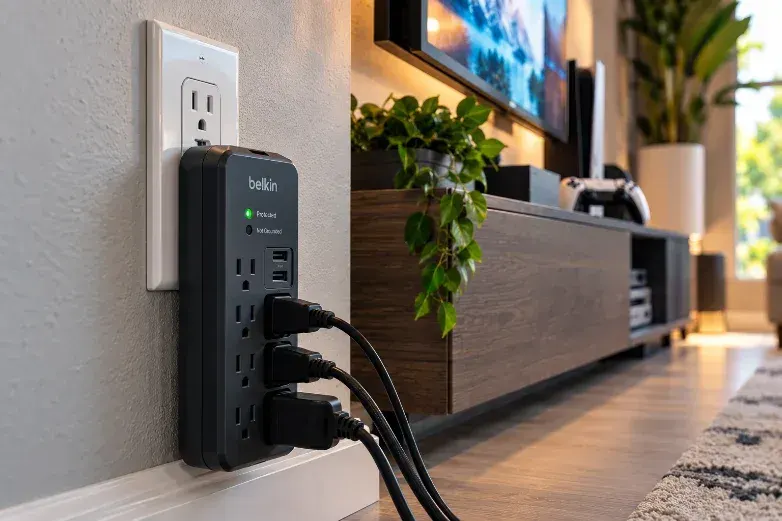
Point of use
TVs, computers, consoles
Plug-in strips and surge outlets at the device. They catch what gets past the panel protector, but can't stop a large surge on their own.
Surge protectors we install
Matched to your panel, with real kA ratings — not the cheapest box on the shelf.


5 things set your price.
A breaker-style protector needs two open slots; otherwise it mounts beside the panel.
The device has to match your panel, or mount externally.
AC disconnect, pool or well protection each add a device.
A weak ground makes any protector useless. We test and fix it first.
Included in our price.
Real numbers.
Not "call for pricing."
Nobody else in this market publishes ranges, which is exactly why we do. You will get an exact number at the estimate — this is so you know whether to bother calling.
We price match any written quote from another licensed, insured contractor. Military, first responders and teachers get a discount — just say so on the phone, no coupon to find.
Three levels of surge protection. Pros and cons of each.
In Central Florida, the middle option is the floor, not the ceiling.
Plug-in strips only
Whole-home at the panel
Layered protection
Before we install surge protection.
A photo of your panel answers most of this.
A photo with the door open.
AC, pool, well, solar, generator.
Lost AC boards or electronics after storms?
Surges ride in on these too.
For a second device at the unit.
How it goes
Most people's worry is not the price, it is not knowing what is about to happen in their house. So here it is.
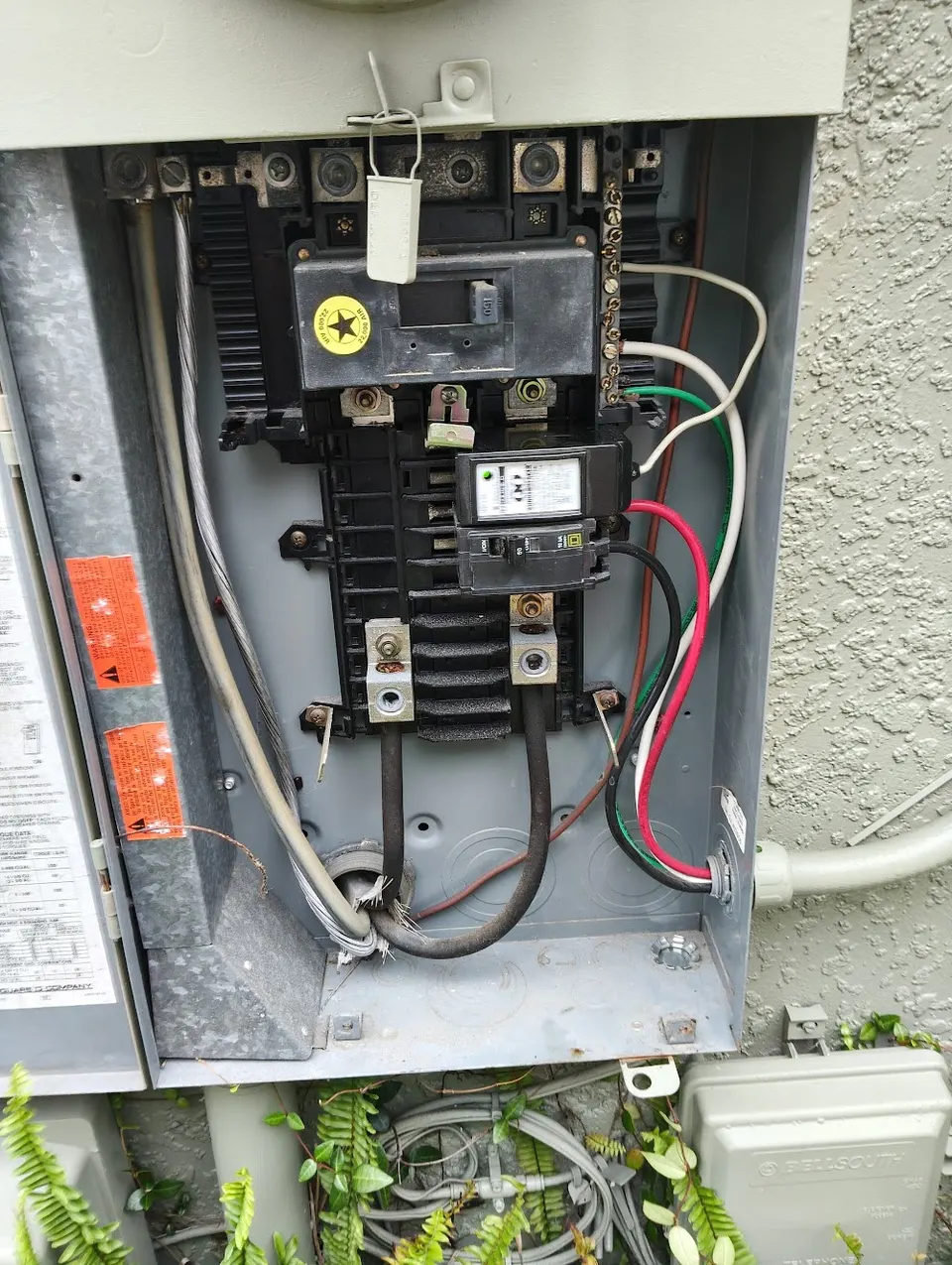
Recent jobs, Surge protection
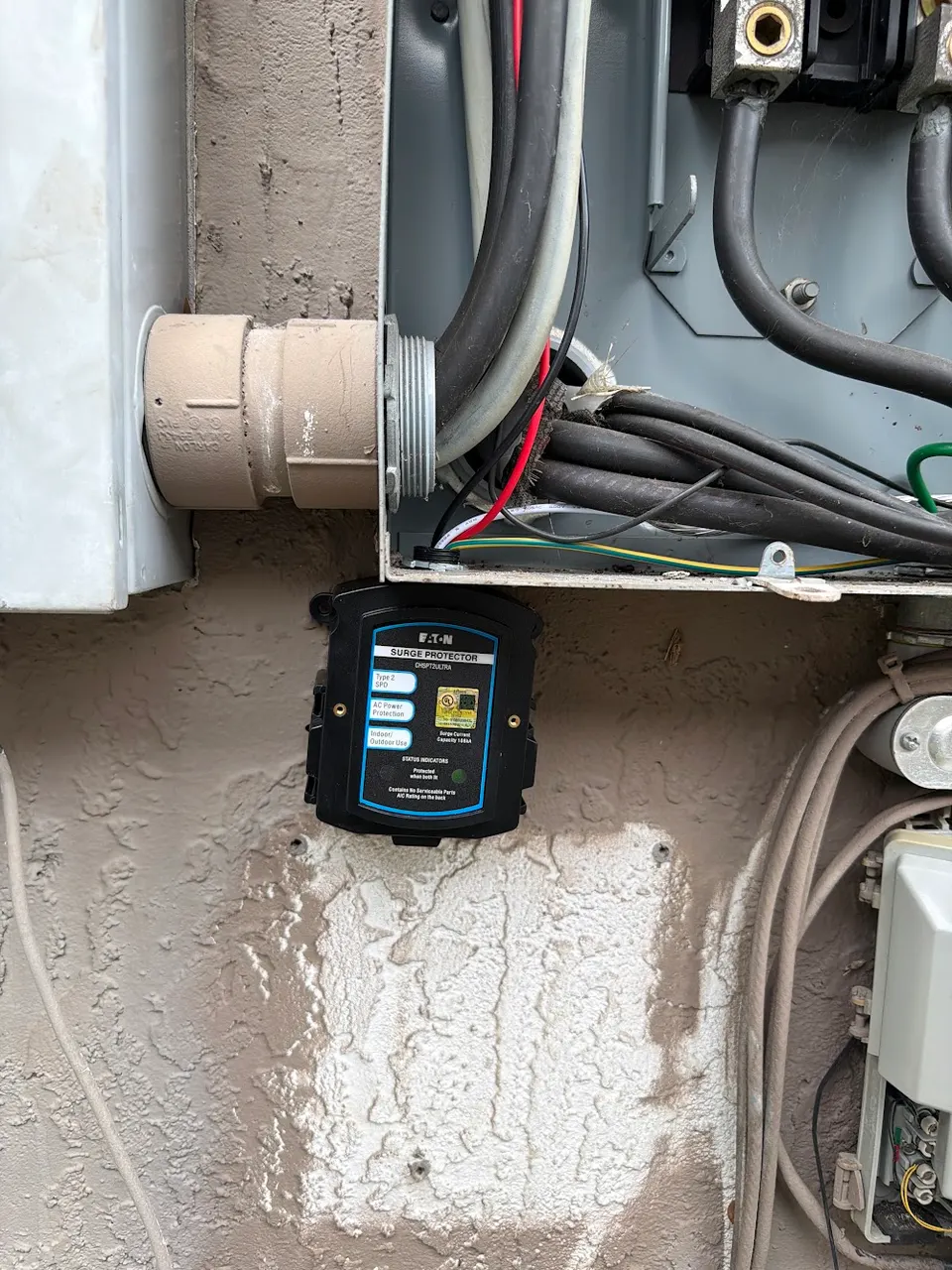
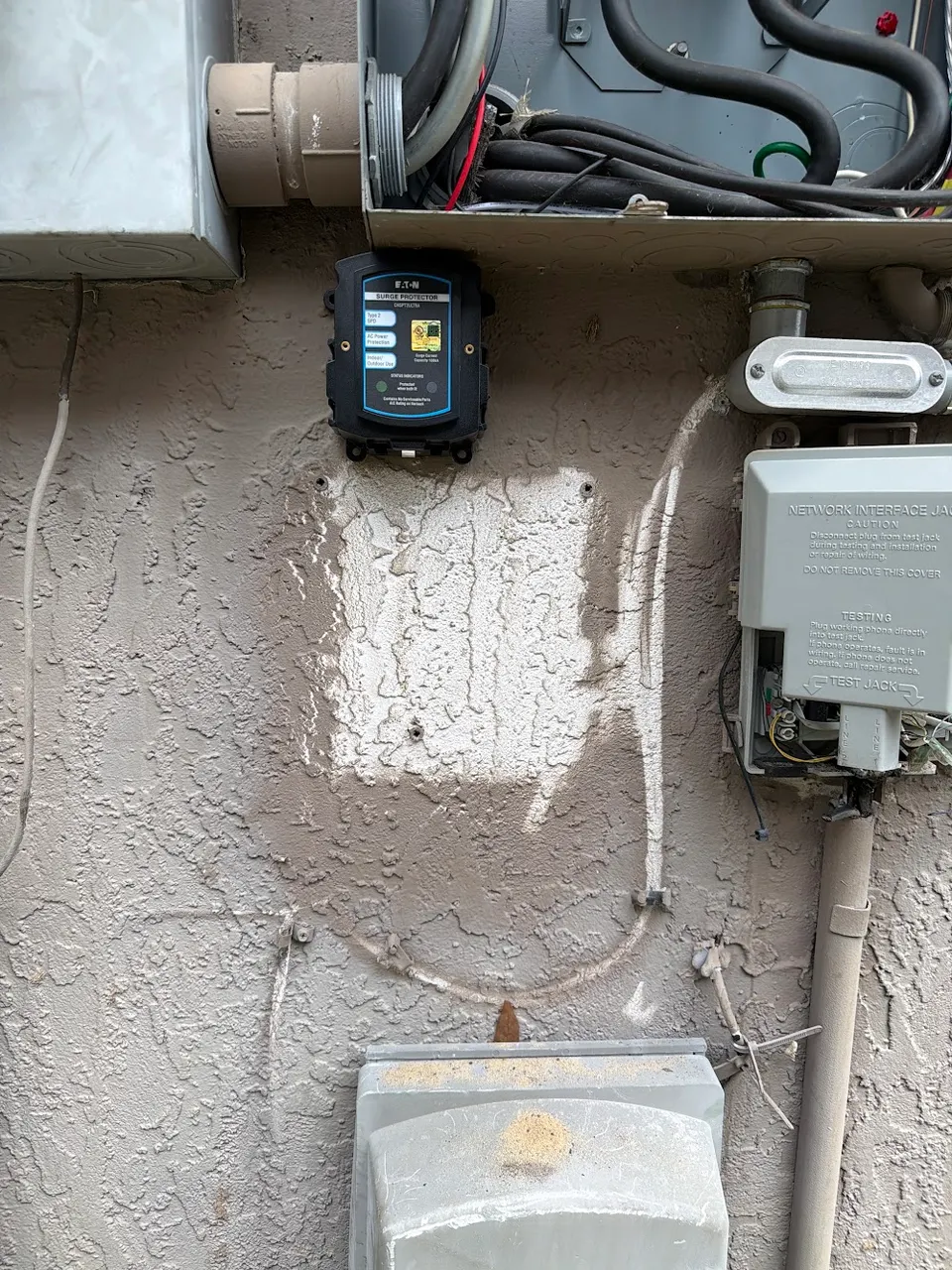
Real reviews, word for word.

"After getting the run around from other electricians I came across In Phase. Wish I found them first."
"Unlike some of their competitors, they don't try to up-sell products that aren't strictly necessary."

"Our old panel dated back to 1984 and was overdue for replacement. We worked directly with Keylin, who was outstanding from start to finish."
"…tried to over charge for work that was not even necessary. In Phaze offered an alternative option at a fraction of the cost."
Surge protection for businesses
Restaurants, offices and retail with POS, refrigeration and HVAC controls. Service-entrance and panel-level protection sized for three-phase equipment.
We handle it. You handle nothing.
A panel-mounted suppressor is typically a straightforward permitted addition, and in some jurisdictions it rides along with other panel work. Grounding corrections, which we often find are needed, are inspected work.
It surfaces at resale, in an insurance claim, and in an inspection you did not schedule.
If a bid is dramatically under ours, ask whether the permit is included. Usually that is the difference.
Filed, scheduled, and met. Customers thank our office by name in reviews for exactly this.
Straight answers.
Do power strips not already do this?
No. A strip clamps small transients at one outlet. A service-entrance surge comes in on the feeders and reaches everything at once.
How long do they last?
They wear out absorbing hits. Good devices show status with an indicator; we tell you what to look for and check it on any future visit.
Does it stop a direct strike?
Nothing stops a direct strike to the structure. This handles the far more common case — nearby strikes and utility switching surges.
Will it protect my AC?
A panel device helps. For the compressor and control board specifically, a dedicated device at the condenser is the better answer.
Is grounding part of this?
It is the part that matters most, and it is the part most often wrong. We verify and correct grounding before installing anything.
Any insurance benefit?
Some carriers give credit. Worth a call to your agent with the model number we install.
Is a whole-home surge protector required?
On a new or replaced service, yes — the electrical code Florida uses requires one. On an existing panel it's optional, and in Central Florida it's one of the best-value upgrades you can make.
Do I still need surge strips?
Yes, for computers and TVs. The panel device takes the big hit; the strip handles what's left.
Surge protection across Central Florida
Get a straight answer before you get a bill.
Free estimate. If you do not need the work, we will tell you — that is the whole reason people come back to us.